The Rainbow Thief


1990 fatherless movie

Rating: 15/20

Plot: An eccentric millionaire goes into a coma while partying with some colorful whores. His relatives worry that his riches will go to his equally nutty nephew, Prince Meleagre, a guy who's shacked up in the sewer with a low-life criminal named Dima where he spends most of his time seeking enlightenment and performing ventriloquist acts with his dead dog Cronos. Eventually, Uncle Rudolf passes away, and then there's a big surprise. 

Here's a problem, probably: I finished watching this movie and had no real idea who the titular rainbow thief was. The whores? Omar Sharif's character? O'Toole's character somehow? I guess it's more likely that it's Sharif's character since it's a singular thief in the title even though the prostitutes were called something like the Rainbow Girls. 

I also had problems stealing a poster from somebody else, too. I didn't like the above one because of the green sticker with the 12 on it. It makes O'Toole look like he's some Godzilla monster on the prowl or something. But it beats this one: 


That doesn't even make it look like anybody actually tried. I'm not even sure that's Peter O'Toole from this movie. And "You can just live. Or you can live it up." as a tagline? What? That is not the movie I just watched.

The movie I watched was, for the longest time, the last movie Alejandro Jodorowsky directed until The Dance of Reality which apparently is only out in some parts of the world. I had low expectations despite how brilliant I think Jodorowsky's other stuff is, partially because the director has "disowned" this movie, the result of frustration at not having much control over the thing. Though it's not as wild or challenging as El Topo or The Holy Mountain or even Santa Sangre, I still thought it was a pretty good movie. Kind of hard to watch though since it's never been released on dvd and didn't even see a U.S. release theatrically. And that makes little sense to me since it pairs Peter O'Toole and Omar Sharif again. Hey, it worked for Lawrence of Arabia, didn't it? Sharif is really the star of this dreamy story, and he's really good as a petty thief. O'Toole's around but never leaves the sewer setting and doesn't get a lot of lines. Christopher Lee is also in this as Uncle Rudolph, surrounded by Dalmatians, clashing cymbals together while riding on some kind of motorized vehicle with a parrot. He feeds his guests giant bones and gives his dogs caviar which probably explains why his relatives are worried about his fortune. And then the scantily-clad Rainbow Girls come in, dance around him, and surround his bed which I imagine is a pretty typical night for somebody like Christopher Lee. There's also a little fellow who gets a big role, a guy helping hock potato bug stuff and wearing a cool suit with a bowler. He's Jean-Yves Tual and has interactions with an extremely tall man, including one scene where he's spun around which I'm not afraid to admit gave me a boner with a capital O. The little person/tall person visual weirdness isn't the only thing Jodorowskian about this movie. There's a carnival atmosphere for a lot of the movie with jugglers and puppets and a fortune teller named Madame Claire who happens to be played by a man. There's a lot of animal imagery including one scene with rats drowning and a sound that is about as horrifying as any sound I've ever heard. And it's a narrative propelled more by symbols and metaphor than anything else. You could look at all of Jodorowsky's movies as reflections of himself. El Topo reflects his religious or mystic side. The Holy Mountain is about Jodorowsky as an artist. Fando and Lis is probably about Jodorowsky as a lover. The Rainbow Thief, a movie he didn't write and was apparently not allowed to make any changes to (he was even threatened), isn't about him at all, but I don't see it as adding up to anything that he should want to detach himself from. And just like Jodorowsky's movies represent him, all the characters in The Rainbow Thief seem to add up to one guy, Omar Sharif's character. The big and little guys, the millionaire, O'Toole's character, and even the whores are really all the same person. And with that reading, this is less of a story about a friendship between O'Toole and Sharif (although a reading about friendship might be just as powerful) and more about one man's quest for enlightenment, one man abandoning what is really non-essential in life and focusing on what is real, the real "gold" that O'Toole rambles about. You know, a symbolic dog and a walk under a rainbow.

So despite what Jodorowsky thinks of his own movie, I really kind of dug this one.
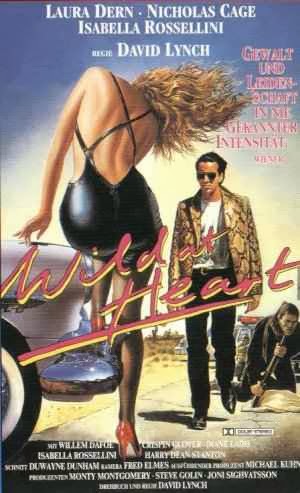
Nicolas Cage's Birthday Celebration: Wild at Heart


1990 road trip romance

Rating: 16/20

Plot: See here where I already wrote about this movie.

I like this movie, one that I'd always considered a bit of an oddball in Lynch's filmography, a little more every time I see it. It's the closest Lynch has done to straight comedy which, since there's a romance at the center of it all, makes it Lynch's cockeyed version of the rom-com genre. It's also a cool road movie and a nightmare noir with Wizard of Oz references, filled with sex and violence and the oddest assortment of characters you'll ever see. So there's a little something for everybody!

Start with that cast! This has one of the greatest casts ever assembled. And no, I'm not joking. One of the greatest casts ever assembled! Cage, in one of the high points of his career, gets to play Elvis in a snakeskin jacket (one that came from his closet apparently), and he fits in great in Lynch's stylized world where adults play peek-a-boo and with the pre-Tarantino stylized dialogue where characters say things like "Stab it and steer," "Johnny Farragan is on us like a duck on a june-bug," and "a boner with a capital O and guys are planted instead of killed and counties are burnt through. After some shockingly over-the-top hard rock violence, we get a great Nic Cage point (has anybody ever compiled all the times Cage points in movies into one orgasmic video?). Later, he tells a story in which he's invited to take a bit of peach, and we all know from Face/Off that Cage can eat a peach for hours. Best of all--and by "best of all," I'm thinking this should be in the running for the greatest moment in movie history--Cage dances, kung-fu dancing with roundhouse kicks and flailing that proves that Cage is a being that is closer to an animal and still greater than a human. The second time the pair dances, in the desert after a Dern freak-out and a Cage scram that gave me goose pimples, managed to top the first dance scene which already topped every single thing that has happened in any other movie ever. Dern, Lynch's little tidbit, is a natural with Lynch's type of dialogue, and she brings an artistic trashiness to the character that, if it does turn you on, makes you a little sad at the same time. She might be able to dance, but I was only paying attention to Cage during those scenes. Same with the sex scenes probably. Willem Dafoe has made a career not being afraid to do anything on the screen, and Bobby Peru is one of his most disturbingly memorable characters. He's so weird looking here with those teeth, snarling "One-eyed Jack's yearning to go peeping in a seafood store" and "You'll hear a deep sound coming down from Bobby Peru." Peru's character gets it in a spectacular way during a ridiculous scene that starts with hosiery on heads and ends with deceased guys searching for a missing hand that a dog is carrying away. Only in a David Lynch fever dream! Harry Dean Stanton's in this one playing the same droopy-faced guy he's always playing. His magical moment is when he starts barking at a television. Diane Ladd gives an unhinged performance as Miss Fortune, coating herself in lipstick and writhing. The most baffling female performance is Grace Zabriskie's as Juana Durango who looks like a Martian from a cheap 50's sci-fi movie, and Isabella Rossellini is a more subdued but equally dangerous Perdita Durango. J.E. Freeman plays his typical tough guy, Marcelles Santos here who gets to say a line it seems like Freeman was born to say: "I am in a killing mood." William Morgan Sheppard is awesome as the awesomely-named Mr. Reindeer, and Crispin Glover is a non-sequitur as Dell, arguably one of the great one's wackiest appearances complete with a little roach-in-underpants dance, a shot of Glover in tighty-whities, and a demonstration of perfect comic timing with a yelled "I'm making my lunch!" I want a Dell spin-off movie so bad. Other characters on the periphery: Marvin Kaplan, the perfectly shocking face of the awful Uncle Pooch; Sherilyn Fenn, babbling and bleeding as she searches for her purse; the other recipient of one of Reindeer's silver dollars, Reggie, played by Calvin Lockhart who should be applauded for his ability to keep a straight face when working with what Zabriskie is doing; cool John Lurie; the great Freddie Jones (Bytes in The Elephant Man) with the hilarious quacking and talk about how pigeons spread diseases, an appearance that Cage and Dern watch so stoically that it makes me laugh just thinking about it; Frank Collison who hilariously gives 120% as Timmy; the "Hey, man, same thing happened to me last year--shiiiiiiii!" guy, Nicholas Love pumping his arm from a wheelchair. Oh, and Sheryl Lee plays the Good Witch. And then, of course, there's Jack Nance with this brilliant and brilliantly-delivered monologue:

"My dog barks some. Mentally, you picture my dog, but I have not told you the type of dog which I have. Perhaps, you might even picture Toto from the Wizard of Oz. but I can tell you my dog is always with me. Woof!"

Cage watches that with the same expression he gave the quacking man.

Hell, why am I not giving this movie a 20/20? I guess because it doesn't really add up to much of anything. But it's certainly hilarious. Lines about smoking since the age of four, manslaughterers, and possible buffalo hunting along with a hilarious Sailor apology and Big Tuna's welcome sign. It all makes me laugh. And you just have to love the fringe details in a movie like this. A pair of jazzy guys on a New Orleans sidewalk who Lynch shows us even though they don't matter one bit. Lingering on a weird-looking dancer with gypsy jazz hands. A guy at a gas station snapping his fingers to the radio. A lonely shot of an elderly guy vacuuming. A guy with a plastic bag. It's a weird, weird world that Lynch's characters inhabit which, if you want to oversimplify things, is probably a lot of the point of all this. Add Badalamenti's eclectic score with some musical contributions from Lynch himself (I really like the "I fell for you like a bomb" song ["Up in Flames" with lyrics by Lynch and music by Badalamenti]) and you've got yourself a movie that could only come from the mind of David Lynch. And no, it's not going to appeal to everybody, but I think it's wildly entertaining, frequently hilarious, and even more frequently disturbing.

Oh, and did I mention that Nicolas Cage sings Elvis songs?

One more thing: Would bOner be a cool band name? People who get the reference would be impressed maybe.

Nicolas Cage Birthday Celebration: Sonny


2002 prostitute movie

Rating: 12/20

Plot: The titular male prostitute wants to leave the business behind following a stint as a soldier but finds it difficult to escape his reputation and the influence of those around him.

This is Nic Cage's only directorial credit so far. Potential is shown, but there are a few naive greenhorn mistakes burdening this film and its story--a weird driving montage, the camera frequently in the wrong places or just in places that aren't very interesting, weird close-ups. Nic makes a cameo as a character called Acid Yellow, sort of a cross between Humpty Hump and Liberace, wearing a yellow suit, gesticulating unnaturally, snorting something, and exclaiming, "I love-co-cock!" Sonny's visit to Acid Yellow is where Cage goes for experimental. It's all hazy, and it somehow makes "A Fifth of Beethoven" sound more menacing than it already is. Speaking of music, Aronofsky's go-to guy Clint Mansell from Pop Will Eat Itself scored this thing with varying effects. There's a sex scene, one of a few blase-filmed ones, with some wildly inappropriate music. The dialogue between Sonny's love interest Carol (Mena Suvari, who shows less than James Franco in this movie) and an old guy is fabulous though:

Carol, robotically: That feel good, daddy?
Old guy: Oh, yes. Give it to me, baby.
Carol, still robotically: Like that?
Old guy: Oh, yeah! Faster! [pause] Gee whiz!

Gee whiz? I don't think I've ever said "Gee whiz" during sex. Maybe that's my wife's fault? James Franco's a little uneven, and I'm not sure I ever fully buy into the character although he's got charisma to spare even in a movie that's kind of dull. He does close his eyes a little too much while acting. He gets a pretty mean Cage-esque freak-out where he beats the crap out of the interior of his Trans Am though, and a slow turn while taking a bite out of a sandwich would be the defining moment of his career if more people saw it. Harry Dean Stanton is also in this, and he's always a treat. He gets the line of his career: "Hey. You got the prettiest pussy." What makes that better is that I think it's supposed to be a tender moment. Brenda Blethyn plays Sonny's mom and really overdoes things, almost biting off James Franco's head at one point. Her New Orleans accent was impossible for me to believe, and it goes all over the place. Some guy named Willie Metcalf oozed what I think of as New Orleans, but I've never been there so he's probably just oozing movie New Orleans. This does seem to be more of a cliched look at the city. There was some potential with this story and these characters, but this wasn't very well executed and bored me a little.

Nicolas Cage Birthday Celebration: Trespass


2011 drama

Rating: 8/20

Plot: Four masked thugs commit the titular crime, breaking into the Millers' home in search of cash and diamonds. The patriarch of the family pleads with his captives as they all try to survive.

This movie broke a record previously held by From Justin to Kelly, a movie that I haven't seen. I know one thing though. If your movie is breaking records previously held by From Justin to Kelly, your movie probably has some problems. This broke that movie's record for fastest theater-to-video release. It cost around 35 million dollars to make and made about 25 thousand dollars in theaters. I'm not really all that good with money, but I'm pretty sure that's what you'd call in the business a total disaster. This is a movie that gets lost in its own twists and turns, and I can't imagine some of these actors and actresses making it through the entire filming without saying, "Wait a second. Are you serious about this one?" at least two or three times. Robbers giving sob stories about a mother dying of renal failure. This whole thing about one of the criminal siblings not taking his medicine. Silly infidelity claims. The daughter's brilliant idea about how to get some cash. A lack of money and then a bunch of money. This is really stupid stuff, and it's all so poorly written that it barely makes sense at all beyond the simple structure of a rich family being robbed. This is the type of movie where "I will put a hole in you!" is the type of line that is good enough to use multiple times. The writing doesn't help the performances much at all. Birthday Boy Nic Cage might be America's finest actor, but as has been established previously on this blog, he's really pretty terrible a lot of the time. I think the formula is pretty simple. If you take Cage and give him a borderline-to-stupendously-insane character, he'll nail it and give a performance that will thrill you. If you take Cage and give him a character who's supposed to be normal, he can't do it. "Normal" is out of his range. Here, he shows fear by stuttering and getting phlegmy. He's added a sniffing thing to his repertoire. I think his character's supposed to be a little nerdy, but he gets to raise his voice and curse a lot which makes me wonder if he really wanted to be a tough guy. Lines like an angry "You did it, kid!" and an angrier "You shit fucking animals!" made me assume that he was allowed to improvise a little. Oh, Nic. The tough/nerdy contrast might be the result of Cage deciding he didn't want to be the sniveling victim in this and wanted to be one of the bad guys instead. Apparently, he actually left the film briefly before realizing he still had comic books to buy and needed the money. The best Cage moment in this is when he whispers, "I need hugs!" to his family while talking to somebody else on the phone. Man, is that creepy. Nicole Kidman plays scared a little more naturally, probably because she was married to Tom Cruise for so long. She looks incredible in this, and there are more than a few shots of her bare feet. If I ever decide to watch this movie again in slow motion, it will be because of her. The bad guy who talks the most is played by Ben Mendelsohn might be the best, but the character doesn't make any sense at all. Some kid named Nico Tortorella plays another rich teenager at a party scene that should have been cut. Writer Karl Gajdusek or director Joel Schumacher should have probably made a trip to the mall and asked if teenagers actually say things like "Oh yeah, it's all kool-aid" before filming that scene. Of course, it seems obvious that nobody involved in this was all that interested in a second draft.

Skritek


2005 "feature butcherly slapstick"

Rating: 15/20

Plot: A few days in the life of a family of four. The father works in a butchery, where he flirts and eventually cheats on his wife with a co-worker. The wife struggles with boredom at her job as a grocery cashier and at home with keeping her family happy. Their oldest is getting in trouble with drugs, spends entirely too much time trying to impress a girl, and is skateboarding his life away. Their youngest is failing her math class because she's distracted by the titular goblin.

I watched a bit of this before tackling the entire thing and fully expected it to be my new favorite movie, another brilliant bit of fun from Czechoslovakia or whatever they call themselves now that I can add to the pile of other brilliant things from Czechoslovakia. It's not my new favorite film, but I enjoyed it. You won't need subtitles as I don't think there are any actual words spoken. The characters all speak in exclamatory grunts and moans, kind of like in the caveman movie Themroc and the nearly-silent German Tuvalu. Here, the grunts, belches, farts, and other cartoonish sound effects accompany action that is credits-to-credits slapstick, one of those cartoons made with human beings. A flesh cartoon! It's a playful and slightly immature world that is created, characterized by zit-popping gags, characters hit by cars, cow-faced teachers and man-faced hogs. It's a bit schizophrenic, maybe even off-puttingly to some since we've got some genuinely troubling experiences for this family--abuse, delinquency, infidelity, and other things we're supposed to be sad about--but with the slapstick tone that takes all the steam out of them. Director Tomas Vorel Benny-Hill-izes it all to a point where it's beyond absurd. Vegetarians and vegans wouldn't like this at all as there are numerous scenes of butchery and a few, almost more disturbing, scenes where characters eat meat or hit each other with meat. Definitely lots of meat. There's also a scene featuring the exaggerated, bouncy beating of meat with a guy who works (and apparently lives) at the entrance to the meatpacking plant. There are some nifty special effects in a movie that otherwise looks kind of cheap. Those animal/human hybrids I mentioned, one which was a drug-induced hallucination and the other part of one of a pair of cool dream sequences, were neat, and I liked how all the photographs had moving images like they were out of a Harry Potter movie. Of course, no movie named Skritek, a word that means Goblin or Dwarf or Gnome depending on who you ask (I asked fourteen Czechoslovakians, twelve who were offended that I wasn't sure what to call them), without a little fellow. Whoever plays that part is good with this enormous tongue and mustache almost as long as his body. And a funnel for a cap. See, he's on the poster up there. I'm not sure if it was a little person actor or a child though. My biggest gripe would be that most of the music in this was pretty awful. I longed for something simpler and less modern. Of course, I could have probably lived without the flatulence as well. Nah, who am I kidding? I like fart jokes as much as the next guy.

Mudhoney


1965 Russ Meyer movie

Rating: 14/20

Plot: A drifter with a dark past finds some work on a farm during the Great Depression. The farm's owned by an old guy, and his niece and her husband, the latter who is an evil alcoholic who spends his time abusing his wife when he's not visiting the redneck brothel nearby. The drifter begins to fall for Helen, the niece, and her husband and an unscrupulous preacher conspire against him.

With Russ Meyers, you can expect certain things, and he doesn't really disappoint here. This isn't his story, however, so it's not quite as outrageous as the other Meyers movies I've seen. In fact, if you just look at the script and the basic plot, you really have something that would be pretty forgettable. What makes this worth watching are some truly odd performances, however. There are a quartet of beauties who all display Russ Meyer's favorite part of the female anatomy. Antoinette Cristiani is so-so as Hannah, but the sisters as the brothel, Clara Belle and Eula (Rena Horton and Lorna Maitland, neither who had any real acting career), are stunning, especially in scenes where the mute one is first seen holding a kitty and later taking a bath. Later, Lee Ballard in her only acting job, is around just to be abused. John Furlong's almost a straight man in all of this as the women and performances from the other men just overshadow him. Hal Hopper impressively hollers or snarls every single one of his lines, stopping only for some insane hee-hawing. He spends the entire movie in the same worn white suit and is probably the most disturbing kisser I have ever seen on film. Sam Hanna plays the oddly-named Injoys who hangs out at the brothel all the time in overalls with no shirt, and he nailed inbred as well as you'll ever see anybody nail it. His "Wha?" reaction to news that the new guy is prettier than him, a moonshine spit-take, and a dance scene with one of the sisters are the kinds of career-defining moments that they usual show when somebody wins a lifetime achievement award. And then there's Frank Bolger (no, not that Frank Bolger) who manages to be even louder than Hopper as a fiery preacher with shady scruples. But then there's Princess Livingston as Maggie Marl who steals the show here, dominating the screen with her weird eyes and toothless expressions. She's probably the weirdest-looking woman I'll see on film in 2014 and has laughter capable of haunting a person's dreams. And when she winks? Hold on to your asses, friends. Their performances make this the fun experience that it is. It all builds up to a really cool ending where everybody gets exactly what they deserve in an almost cartoonish way.

The History of Future Folk


2012 musical comedy

Rating: 14/20

Plot: The planet Hondo is experiencing a little catastrophic asteroid problem, so they send General Trius to earth with a poison that will destroy life on the planet and open it up for Hondonians to live on. You know, sort of like what was going on in that last Superman movie only with a lot less special effects and a budget that would fit inside the pockets of my parachute pants. Trius hears music, something they don't have on Hondo, and reconsiders. In fact, he settles down, gets himself a job, marries, and has a daughter, all while learning to play the banjo and performing nights at a bar. And he searches for a way to save Hondo from that asteroid. Hondo loses its patience and sends a pair of assassins to earth after Trius. Kevin, the first, is introduced to music and teams up with Trius. The other might present more problems for the pair as they try to make music together and find a solution to Hondo's problems.

Cute little indie sci-fi comedy with, seriously, zero special effects. Just check out their costumes which may or may not include a bucket with a box cut out for the face. The cheapness makes it more endearing somehow. It's sort of an origin story, I guess, for the titular self-described alien bluegrass band, and the duo are fine musicians with good voices if you don't mind your folksy music with lyrics about imaginary planets and space worms. The song about space worms is the first they play together, after Kevin has apparently learned to play the guitar in about 12 hours, and that song put a huge smile on my face for a variety of reasons. There are more than a couple of missteps in this storytelling--the silliness with Trius's earth wife, Kevin's love interest or a visit to her house to play her a song or the crashing of her tango lessons--but it's creative enough with just the right amount of low-key humor to keep it all charming. Oh, I'll take my "zero special effects" comment back because this does have a space assassin. He looks ridiculous though, a little less than what the people who make the Power Rangers shows would consider acceptable. My favorite part of this might be an appearance by Dee Snider who owns the "Trash Bar" (that's the name of it) with a back room that smells like piss because he "sometimes pisses back there." This isn't perfect, but it's fun enough and I enjoyed listening to Nils d'Aulaire's banjo, especially during the scene where he plays music for Jay Klaitz's Kevin for the first time. I did almost want to dock it a point every time the characters said "Hondo!" though. That reminded me of something, but I can't remember what.

I was pleased to see a stuffed carrot from Ikea in this. Carrot Man is an important member of our family here in my house.

Despicable Me 2


2013 sequel

Rating: 10/20 (Jen: 16/20; Dylan: 7/20; Emma: 17/20; Abbey: 17/20; Buster: ?/20)

Plot: The AVL (Anti-Villain League) enlists former supervillain Gru--the titular "me"--to help them track down a supervillain who has used a giant magnet to steal an Arctic laboratory. Grum and Lucy, an AVL agent, investigate. Gru thinks it seems like the work of El Macho, a villain who dresses like a Mexican wrestler, but it's probably not because he's dead. Only it is totally him. Meanwhile, Gru struggles with his lack of love life and raising daughters who may be starting love lives of their own.

Those minions sure got annoying in this. I still think the main character is likable enough, and a lot of what Steve Carell says and how he says it is kind of funny. But that's about it. The new character's annoying, the new bad guy is annoying, and the minions are annoying. I liked but didn't love the original in what is bound to be a series at least as long and tedious as those Shrek movies, but this just seemed like a loud bunch of colors. The story just seemed like an excuse to throw out a bunch of gags, and there were musical montages galore which just seemed like a waste of my time. The writers tackled far too much here, and the movie felt at times like it was just flailing. These days, animated movies are made a lot better than this, and they have much better stories. I was checking the watch pretty quickly during this one and don't really feel like writing more about it. I'm not sure enough time can pass where I'll feel like seeing another minion again. One of the minions?

I Hired a Contract Killer


1990 Aki Kaurismaki black comedy

Rating: 16/20

Plot: A depressed Frenchman in England decides to end it all after he loses his job and is given a watch that doesn't work. He's apparently not very good at that either and hires the titular killer to do the job for him. Soon after, he meets a woman selling roses at a pub, falls in love with her eyes, and changes his mind. The contract killer, however, is relentless.

This story might not be completely original, but the execution is undeniably Kaurismakian. Sometimes Kaurismaki's camera doesn't move at all. Here, it does, but predictably, there's nothing at all flamboyant about this, and the pacing and dark and deadpan humor are as reminiscent as Jarmusch as ever. This one is in English although Jean-Pierre Leaud's English is a little on the broken side, and that might make it the most accessible Kaurismaki that I've got on my blog. I could throw some of the dialogue on here, but it's not going to mean much without the context and delivery of the actors. But I'll do it anyway. I liked these two a lot:

Henri: It doesn't work--thees watch.
Secretary: Yes. It does.

Margaret: Why did you leave France, Henri?
Henri: Said the don't like me there. (At least I think that's what he said. His accent is pretty thick.)

See? I told you that wouldn't work. This isn't going to be laugh-out-loud comedy for most people, but I did laugh at Leaud's "Where I come from we eat places like this for breakfast!" attempt at tough-guy during one scene. And this little screw hook thing he puts into a wall during his first suicide attempt--should that have made me laugh? Leaud, the kid in The 400 Blows, is funny here although like most Kaurismaki actors, he doesn't really look like he belongs as the hero in a movie. Margi Clarke is entirely devoid of personality although she does have a pair of eyes, but that lack of personality, in a way, makes the whole relationship even funnier. I liked Kenneth Colley as the killer. He's menacing enough, and this movie does get its share of suspenseful moments, too. The first attempt on Henri's life, a scene surrounded by footsteps, is really good, and a just-missed encounter also worked well. Unlike a lot of Kaurismaki's movies, this doesn't take place in Finland, but he still found locations like you'd typically see in his movies--a doctor's office with "Surgery" on a the storefront on a street littered with trash bags, Vic's French Hamburgers with a cemetery in the back. All in all, it's another winner from one of my favorite directors!


Shane Watches a Bad Movie with Friends on Facebook: Curse of Bigfoot


1976 Bigfoot movie

Rating: 2/20 (Fred: 2/20; Josh: 2/20)

Plot: Five teenagers with an interest in archaeology and their teacher go on a field trip with a guy who claims to be an archaeologist. They find a lot of prayer sticks and some rocks. I'm not even fucking joking. That's seriously what the script of this movie had them find. Prayer sticks! After a lot of unnecessary scenes of the characters standing around or eating, they stumble upon a cave where they find a mummy. That mummy later comes to life as a Bigfoot creature and wreaks havoc. Three of those teenagers, sadly, had to be institutionalized, and it turned their teacher into a real grouch.

Bigfoot isn't spotted very often, but I found something that is even more rare than the elusive beast: Interesting parts of this movie!

So here's how this happened. There was a movie called Teenagers Battle the Thing made around 1963 that makes up the bulk of this. It was unreleased. In 1976, two of the kids in the original played two entirely different characters, and an extended exposition was filmed to set up the last hour of the movie which was that original early-60's movie. So you have a half an hour of exposition where a guy (or girl--we couldn't tell) in a pantsuit gets attacked by the titular monster, a teacher in what must be some sort of Introduction to Monsters class that we didn't have at my high school talks about monsters and tells a story about two guys who get attacked after seeing the monster, and a surly guest speaker comes in to that classroom and shares his story--the original movie's story--with the class. And then it ends abruptly.

And in between what passes as important plot points in all this? Lots of extraneous shots of slowly-driving trucks (twice anyway with two different trucks), shots of the teenagers and two adults scaling a mountain, weird day/night continuity errors made weirder by having dialogue about seeing stars, conversations about going into town to buy pop, a minute-long scene involving a character giving another character some money for an orange pop, lots of prayer stick (I swear I'm not kidding about these) explanation, and a few shots of the monster itself. The monster's obviously a dude in a costume since this is either the late-50's, early-60's, or 70's when this is being made. It's a terrible costume. The monster's got something wrong with one eye, iffy fangs, and patches of hair missing, and I'm not sure why the makers of this decided to ever show a close-up of the thing. Well, just look at the cover. I guess hundreds of thousands of years in a cave will do that to you though. It's hard not to laugh whenever the monster shows up on screen which is not a good thing considering this is supposed to be a horror film. The acting's almost as ugly, and curiously--though not surprisingly at all--none of the credited actors in this movie had a second acting role in their filmographies. The non-credited ones did, including Jackey Neyman who was Debbie in Manos: The Hands of Fate. Boy, think about it. You're in two movies, and one of them is this pile of crap and the other is Manos: The Hands of Fate. That's what I'd call a career. It's also the only movie the director made. And it's the only movie I've felt the need to apologize for to the other Bad Movie Clubbers, one that required a pep talk in the middle just to get everybody to man up and make it through the thing. Curse of Bigfoot will numb your mind as it takes seemingly hours to get to any kind of plot at all and mostly seems to cut out what most people would consider the good parts to show the mundane, like a weird experimental film almost.

Song of the South


1946 repressed classic

Rating: 15/20

Plot: Somewhere in the happy-go-lucky postbellum South, Johnny's family travels to Grandma's plantation. Johnny's upset when his dad takes off, however, and has trouble adapting. Just as he's planning on running away, a storyteller named Uncle Remus tells him some stories about animals that teach him lessons about life. Meanwhile, there's a cat, a pair of mean brothers, and a girl. And a bull!

I'm trying to guess why people consider this movie offensive. Is it that former slaves--this isn't, as some people who have never seen the film think, about slaves but during a post-Civil War time where plantations in Georgia would more than likely not look as healthy as they look here--are shown as so content with their lives? Is it the "Mr. Bluebird on my shoulder" line? I mean, why does the bird have to be blue? I don't see color; I just see the bird. Or--and this is definitely the most offensive part for me--is it that the movie makes white people seem so boring? Seriously, rich white people are as dull as hell! No, here's what is most offensive--a suit with a lace collar that poor Bobby Driscoll is forced to wear in this. Wowza.

It's definitely not, or shouldn't be, the animated folk tales with Br'er Rabbit and his friends and antagonists. And no, "tar baby" is not offensive in context, and these stories are important as folklore and as a part of American history and African American culture. A prologue says they're "rich in simple truths, forever fresh and new" and Remus later claims they're "stories that don't do no harm to nobody, and if they ain't done no good, how come they last so long." I always like what Disney does with folklore--the tall tales, mythology, even the Washington Irving story which isn't folklore at all but feels like an urban legend--and the Br'er characters are as lovable and unique as anything they created during this time. This was the first Disney movie featuring live actors, and a lot of times, you get the flesh 'n' blood characters walking around an animated world or in a real world with animated characters. The first "Zip-a-Dee-Doo-Dah" (one of Disney's best tunes, ya know) is magical with Remus walking in a suddenly animated world. It's like a splash of cold water there, and I also really like a scene where he has a conversation with a frog and starts fishing. James Baskett, who did win an Academy Award (first for a black actor) even though he wasn't able to attend premiere festivities because of segregation laws, is fantastic in this. Indianapolis can claim him and should do it proudly just because of the way he says the word bo-dacious in this movie. Sadly, he died at 44, two years after this was released. That made me really sad, but reading about the child protagonist of this depressed the hell out of me. Geez, Bobby Driscoll's story is a tragic one. I don't think I'll be able to watch Peter Pan or Treasure Island the same way again, and Disney doesn't even want me to watch this again. Driscoll's a bit child-actor-in-the-1940s since that's something that's impossible to escape from, but he and Glenn Leedy--the kid who played his little black friend named Toby and who didn't appear in another other movies--are both pretty good. I can't say the same for any of the Faver siblings. Georgie Nokes might win my Tootie award this year for his delivery of "Where'd you get those clothes at?" and the only thing for old-fashioned than the way the blacks are portrayed in this movie is the silly thumbs-in-ears-finger-waggin' taunting motion that Nokes does in this. Gene Holland, the other Favers brother is almost as bad himself, and Luana Patten completes the bad acting Faver trifecta with her performance.

This movie is dated in more ways than just the one that makes it offensive to a lot of people. But seriously, if you want to gripe about how life as an ex-slave is painted so idyllically, what exactly do you expect? Do you really want a children's movie to show Uncle Remus, after he was telling stories and saying he forgot the time and later was revealed to be lying to be beaten severely on screen? Driscoll's story tends to drag a little, and things get a little silly near the end when he's chased and pummeled by a bull (unfortunately off-screen although a shot of a prostrate Driscoll with the bull standing about fifteen feet away with a "What? What did I do?" expression on his face is kind of funny). Still, this is a good film and shouldn't be nearly as embarrassing as the Disney people seem to think it is. It's worth seeing for the animation sequences and Baskett's performance at least.

Vinni Pukh (and a few other Russian cartoons)


1969 Russian Winnie-the-Pooh

Rating: n/r

Plot: Three of the stories fans of Milne or the Disney Pooh cartoons will be familiar with--Pooh tries to use a balloon to get some honey, Pooh and Piglet visit rabbit and eat his food, and Eeyore has the most depressing birthday ever.

I really enjoyed this, but my wife, a fan of Pooh, didn't care for it. It's charming with a much different look but similar innocent style as the Disney versions. There's a childlike wonder with the shapes and colors in this animation. Pooh looks more like a bear although his paws aren't attached to his body. Most bears I've seen have their paws attached. This Pooh's more rotund, probably not even a shape that would permit walking. He sings a song over and over again, something that sounds really angry because the Russian language sounds a little angry even though he's singing "Param-taram" and talking about how it doesn't matter if he scratches his head because it's filled with sawdust. Although I guess that would be enough to make a person angry. Eeyore's just as profoundly melancholy, and his first appearance--a shot of colorful flowers and a panning up to his weeping reflection in a pond--is a beautiful work of art. He throws out one more "damn" than the character in the Disney version. Owl's a woman in this, and Piglet, who apparently exhales helium, is wearing a blue-and-white-checkered number instead of the weird striped pink body suit thing. I almost watched this sans subtitles because it really wouldn't have mattered, but I'm glad I found a version with them because I liked the humor.

Since the Vinni Pukh shorts didn't add up to a full-length feature film, I decided to watch "The Story of One Crime" which was also by Fyodor Khitruk and made in 1962. It's a more adult story since there really is a crime--a bludgeoning. Russian cartoons didn't include adult contemporary stories when Stalin was around. This was cute and sometimes clever, but it's nothing that will last forever. I watched a couple episodes of Nu, Pogodi ("Well, Wait") by a guy named Kotyonochkin. It's sort of a Russian Tom and Jerry thing with a wolf and a bunny. I liked it fine but wondered if there was something more subversive about the whole thing. Apparently not as Kotyonochkin did not like subtext. Nu, Pogodi was apparently wildly popular with children. Finally, I watched "The Glass Harmonica" by Andrei Khrzhanovsky again. I'd written about it previously when I watched it as part of a Russian animation compilation, and it's still just as great. The first animated film to be banned in Russia, this is a beautifully surreal piece that at times as imagery and imagination reminiscent of Yellow Submarine. It's cool, and if you are in the mood to watch some Russian animation, the Pooh shorts or "The Glass Harmonica" are both recommended.

The White Reindeer


1952 were-reindeer movie

Rating: 15/20

Plot: A gal gets married and instead of buying a self-help book decides to visit a witch man to help her in the sack. Instead, she becomes the titular were-reindeer and starts killing off men in the village.

After a haunting song accompanying shots of the Finnish snowy landscape, this seemed like a silent movie from 1952. It started wordless and dialogue was used sparingly throughout which adds to the mysterious feel. I don't think director Erik Blomberg had to try very hard, but there's some great imagery in this. An alter surrounded by antlers sticking out of the snow is a creepy-enough visual. There were also loads of reindeer extras, a herd of gray against an almost entirely-white background, and there's a beautiful close-to-final (should have been the final) shot of dusty snow blowing across the surface of ice. Some raucous reindeer racing at the beginning certainly looks like a dangerous activity, speaking of reindeer. I felt sorry for one poor guy with only one antler. And I was really impressed with the movements they get from this reindeer. They've made it look like the animal knows it's part of a movie and is cooperating fully. The humans are good, too, at least the pair who stand out. Most of the characters are treated with about as much importance as the snow. The reindeer is somebody named Mirjami Kuosmanen, and she's really good in a style from 25 years earlier with those exaggerated silent movie mood swings and faces. I really like the way she's lit in this movie. And the witch man is really awesome, Arvo Lehesmaa who might be using actual words (I don't know Finnish) but sounds like he's just making noises.

By the way, I did a little research and found out that this kind of thing happens in Scandinavia all the time.

I watched this on Network Awesome.

Metropolis


1927 science fiction movie

Rating: 19/20

Plot: In the futuristic titular city, the rich thinkers live above the ground, frolic in beautiful gardens, and wear some of the gayest costumes imaginable. The workers exist subterranean where their jobs are often dangerous. One of the above-grounders, the knickerbockered Freder Fredersen, spots Maria, a sort-of prophet from below who babbles on and on about how the "heart" will someday join the "hands" and the "head" together. People just listen to her because she's a cutie. Freder is enamored and heads down to do some stalking, and he ends up taking the place of one of the workers. This is kind of an issue since Freder's father is Joh Frederson, the leader of Metropolis. Meanwhile, an inventor who once loved Joh's dead wife has invented a hot robot woman.

This was the first time I'd seen the two-and-a-half-hour restored version from 2010. It looks terrific for the most part with giant music, and the added material definitely makes it more coherent than the version I saw a long time ago. This was the first full-length science fiction movie, and Lang's not horsing around, creating an epic that you could almost accuse of being overly ambitious. The message behind the story might be as relevant as ever, but I don't really watch movies for the politics or social critiquing. The themes, if anything, are a little heavy handed. But the wonderful visuals make up for all that, making this a milestone and an artistic achievement. These are some of my favorite visuals ever, and seeing things filmed in the mid-20s that seem brand new to me in 2014 is nothing short of movie magic. Start with the most indelible image--that hot robot woman. Should I be this sexually attracted to a robot? A scene where Maria--Brigitte Helm who is quite the silent babe herself--transforms into the robot is mesmerizing, and the special effects really wouldn't catch up for another thirty-five years. The early scenes of the workers marching to their jobs, despondently and in unison, and an opening shift change sequence is fascinating. The machinery below, just like the urban landscapes above, are so big and beautiful. I liked watching the workers at their tasks. There's a rhythm to their work that would have existed even without the aid from the music. I also liked the visuals during a chase scene through catacombs, one of the finest examples of Expressionistic setting. Seven deadly sins statues certainly are sharp, and a truly menacing flood scene with camera angles and movements and quick cuts used to artificially create the action makes for a terrific climax. Hell, just the impressive array of extras is enough to get you excited. This thing really is fucking grand! Brigitte Helm is a star here, versatile and sexy. I'm wondering if she got the part right after the producers saw her eyes or if they had to see her long beautiful fingers, too. Her physicality in that chase scene is great pantomime, but when she belly-dances--as the robot--in translucent clothes? Well, it's something to behold, and I am not ashamed to admit that it gave me a Roaring Twenties boner. I really loved the reactions of the men during that scene, their faces piled on top of each other with the magic of superimposition. What a scene that is. She wreaks havoc, including some gay silent movie fisticuffs. And when she winks in this movie? I paused the movie to thank God. Gustav Frohlich is your typical dopey 20's cinema hero. And those knickerbockers! They might make it difficult for some people to root for Freder in this. Then again, this takes place in 2026 which means I only have to wait a few years for extreme knickerbockers to come back in style. I can't wait. By the way, if I were Freder's father, I think I'd put a stop to the way he touches me in this. The inventor's an interesting character who never makes much sense at all, and there's a guy called the "Thin Man" who really should be called the "Oddly-Shaped Man." My favorite male character was chubby Grot played by Heinrich George. He's the "hands" if you're keeping score at home, and he has this burning-at-the-stake dance scene that is pretty sweet. I also like his method of avoiding handshakes--stubbornly shoving both hands down the front of his pants--and may borrow the move. A lot of people think silent movies are really boring. They'd probably think this movie is really boring, too, but I don't think there's any way somebody can watch this and not be impressed with the vision of the people who put this together and the execution to get that vision on the screen.

Miller's Crossing

1990 gangsta movie

Rating: 19/20

Plot: A movie about hats. Or, the story of a guy playing chess with himself. Or, a gangster Yojimbo. Take your pick, but I think it's a movie about hats.

"There's nothing more foolish than a man chasing his hat."

Coen brother movies, like classical music pieces I've never heard before. I'll hear something new to my ears; think about how it's always been around before, always been as beautiful as it is, and will stick around forever; and think about the genius that goes into the creation. The Coens are like virtuoso musicians. And they're contemporary, of course, making things in the present tense that have obviously not "always been around before," but that's how you know you're watching a masterpiece. This movie's considerably younger than I am, but it feels like it belongs in the history of movies, canonical and classic. This, like a lot of Coen Brother movies, will last forever. They're playing a music that is familiar, one that definitely fits snuggly in a genre, but it's a piece of music that will last forever because they hit all the right notes perfectly.

The right notes: That hat blowing through the woods in what we later learn is a dream sequence; Marica Gay Harden's Verna's open blouse; Leo's squeaking shoes; the slang, even when a "wart on his fanny" idiom doesn't register with one character; the looks of a dog and a little kid in a flat cap at a dead guy; dead guy's drooping toupee; the colors of that ladies room; Verna's right hook and the shake of her rump as she walks out of that room; the crack of a mirror; the way Turturro is dwarfed by the chair he sits in when we first meet his character; a fat kid's sailor outfit, an outfit he has to be squeezed into; Mike Starr, Kenny from Ed, and his size and the patience demanded as he prepares for a pounding; rumpus choreography; a match lit on a cop's badge; curtain transition; curtain transition again, majestically; gagging accompanied by "Oh, Danny Boy;" walks up flights of stairs in unison; smoke from a Tommy gun; dialogue with dialogue--shifts from Tommy to Leo during the revelation about Verna; an elongated scream that could very easily be the new--female--Wilhelm; a slowly-passing street car; blue-gray smoke; the sound of a stretching leather glove; a sly silver gun on a tiny table; bruised faces and the groaning of trees; a pair of nearly identical Italians sitting on the mayor's couch; Sal's shaving nicks; another hat on the stairs and an old lady concerned about her cats.

I'd always had a little trouble keeping up with gangster plots and characters until I realized they're a lot like samurai movies. This one is a lot like Yojimbo or, if you're a cowboy, A Fistful of Dollars. The plot's complex because you don't get the internal monologue of these characters and their motivations are often difficult. The Coens borrow from two Hammett novels and, of course, The Godfather since you really can't make a gangster movie since The Godfather without borrowing from The Godfather. This is the one that led to some writer's block which led to Barton Fink which made me give this a bonus point because I love Barton Fink so much. The characters are well-defined and brilliantly acted. You could always do worse than starting a movie with Jon Polito--that mustache, the way he smacks his lips as he prattles on about the ethics of fixed fights, establishing a sort-of theme right from the get-go. Finney's Leo is a great character, too, a boss so flimsy beneath his tough exterior that it almost seems like he's already bullet riddled. "Johnny, you're exactly as big as I let you be and no bigger" makes him Godfather-esque, but that's just the brawn talking. But Finney can punch, and Leo can shoot, evidenced by his escape from his assassination with one of the most amazing death scenes of all time, all machine gun chatter and absurd fire and jerking around. Byrne's Tom Reagan is a suitable Irish Eastwood/Mifune, foreshadowing with his "When I've raised hell, you'll know it," and almost exactly as smart as he thinks he is. I'm not sure Harden's worth a war, but she's really good here, too. Or maybe she is worth a war. She can tug on a cigarette, and as I mentioned, I did watch her walk out of that restroom. Eddie Dane seems like a composite of a bunch of other characters; J.E. Freeman plays him like a cliche, but it works, and his death is another absolutely ridiculous scene where the character's surrounded by antlers and a gorilla screams madly. Mike Starr's great although having him sing at the titular crossing wasn't the best move, and Tic-Tac (Al Mancini) is awesome, especially with his laughter during "hanky time." But check out John Turturro! Man, I love that performance! There's a little Jesus in his walk at one point, and he manages to create the most pitiful soul that I think you're ever likely to see on the screen during the scene at Miller's Crossing at the center of this movie. It's powerful stuff. I love these fragile characters in their tough-guy hats, and I love the story they find themselves in.