Brain Damage


1988 horror comedy

Rating: 12/20

Plot: A guy's life is ruined by a creature that grows out of him, offering him euphoric feelings in exchange for human blood.

"He needs the brains, but I need his juice."

This fun little horror-comedy from the damaged brain of the guy responsible for Frank Henenlotter doubles as a too-obvious metaphor for drug addiction. The too-obvious part is probably part of the gag.

Lots works here. The effects for this little creature work, and a lot of the humor does too. That little guy's first appearance--a surprise appearance in a mirror with a goofy "Hi!"--makes me smile just thinking about it. That's after an endless scene where the protagonist bleeds, sees an eye, and has his bedroom flooded. A scene with some meatballs and one where our beleaguered hero enjoys the colors at a junkyard are also fun. There are two music moments worth noting--a live performance by the Swimming Pool Cues in a club and "Alymer's Tune," a lovely little number sung by Alymer from a sink.

The weirdness definitely isn't paced very well. Some sequences go on and on, and there are some odd scenes that just don't seem to fit all that well. That's right, naked muscle guy in the shower--I'm looking at you. And yeah, I realize how what I just typed can be taken out of context. The acting is not very good. Rick Hearst gives a Bruce Campbell-esque performance as the lead. Theo Barnes is really terrible, bringing all these wacky histrionics. Barnes also gets a great death scene, histrionically wacky.

There is a Basket Case allusion here. It's fun.

The Last of England


1987 avant-silliness

Rating: 9/20

Plot: Not really much of one.

It's a good thing I took notes on this movie because it's almost instantly forgettable. Here are my notes:

"dry humping a painting as a prelude to the apocalypse--a veteran move"
"pan pipe as the world falls apart"
"shirtless guy with ballerina skirt and horns dancing around a fire"

Those were my notes.

I didn't enjoy this movie, and I don't think I enjoy Derek Jarman.

The Band Wagon


1953 musical

Rating: 14/20

Plot: An aging song 'n' dance man joins a pretentious stage production and falls for a dame.

Vicente Minnelli might not be for me. As a cinephile who loves color almost more than he loves anything else, it seems odd to say that Minnelli isn't for me. I enjoyed the colors in this one, too. Some shots dazzle with striking colors. A song-and-dance number in Central Park, the weird and noirish "Girl Hunt" sequence (especially a great shot of Astaire on a fire escape), the hyperactive colors at the arcade where Astaire gets a shoeshine, hotel wallpaper and furniture. There are lots of colors, and as a guy who likes colors, that alone makes this worth watching.

Actually, it's worth watching because of that shoeshine. This is a comedy that I can't imagine would make too many people laugh, but I lost it during this shoeshine sequence. Astaire starts singing about how wonderful shoeshines are, probably with the lyric "I like a good shoeshine because a good shoeshine is fine!" in there somewhere, and he and the shoeshiner started dancing flamboyantly and whipping towels around and circling the shoeshine chair while people watched. I started imagining that happening in real life and then couldn't stop laughing for over twenty minutes.

Fred Astaire seems completely unnatural in this when he's doing anything other than dancing. All of the male performers give pretty hammy performances actually. Cordona has a great Price-esque voice, more deliberately hamming it up because that's what his character is supposed to be, but with Astaire and that other guy, it's just a wackiness that makes them seem like the type of people who would be overly excited about getting a shoeshine. I did like both women in this. Cyd Charisse showed more versatility than even Astaire by dancing ballet, soft-shoeing in the park, and getting downright jazzy during that "Girl Hunt" bit. And I fell in love with these striking green gloves that she wore in one scene. And when she removes a coat and reveals this glimmering red dress, one that showed off a whole bunch of her lovely legs, in the "Girl Hunt" club? My, oh, my. I think I became a man at that stage.

Mandy


2018 action horror movie

Rating: 15/20

Plot: A lumberjack gets his revenge on a trio of demon bikers and a religious cult after his wife is abducted.

This is clearly a cinematic portrayal of Kubler-Ross's stages of grief.

Stage 1: Free yourself from barbed-wire shackles, metaphorically, of course.
Stage 2: Drink, growl, scream, cry, and drink some more while wearing a tiger shirt and your underpants in a bathroom.
Stage 3: Forge your own bitchin' battle axe, motherfucker!
Stage 4: Take LSD and have your face melt off.
Stage 5: Kill the demons, and kill them good!
Stage 6: Chainsaw fight!
Stage 7: Smile a blood-toothed smile at a hallucination.

In Terre Haute, there's an old record store run by hippies. It's been there since the late-60s and manages, probably since they sell a variety of other things, to stay in business despite this particular type of store seeming like a thing of the past. On the exterior of the little building Headstone Friends operates in, there are these paintings of dragons and things. My mother never wanted me to go in there because there were rumors that they sold drugs, but that, of course, turned out to be pretty far from the truth. They were a nice group of hippies. When I first started going in there while in high school, it seemed forbidden. The incense was strong, the heavy metal they liked was blasting, there was little light, and there was a vaguely druggy ambiance. There was one particular room, about the size of a large closet, where they had these fluorescent pictures illuminated by black light. Walking in there, a person almost seemed obligated to put up a couple finger devil horns. That little room was, at least to me as a kid, the most rock 'n' roll place on earth.

Mandy is that room. I've seen it compared to heavy metal cover art or paintings on the sides of vans, and those are appropriate comparisons, too. Johann Johannsson's final score combines with the hallucinogenic artsy-psychedelia to scorch your lobes, Nic Cage manages to be simultaneously subdued and swing battle axes and chainsaws and scream "You ripped my shirt! You ripped my shirt!" like he only watched Brad Pitt's "box" lines for preparation, and the dark imagery and ridiculously bleak vibes in the characters' interactions with each other make the whole thing seem like there was a massive goth leak at a Hot Topics or something. Panos Cosmatos's long-awaited follow-up to Beyond the Black Rainbow is meticulously excessive in almost every way, every breath this movie is an inhalation of some cosmic energy and exhalation of fiery funk. The movie is nuts, but it's the product of a singular vision and refusal to compromise that has to be appreciated. You imagine people seeing a storyboard for some of this heavy-metal mayhem and telling the director that he can't do some of this before being answered with a "Yeah? Well, watch me do all of this, mo-fos! Rock 'n' roll!"

So there are cheddar goblin commercials, Erik Estrada knock-knock jokes, ax-forging montages, tigers, knife dicks, cultists entertained by automatic windows, horn of Abraxas ridiculousness, animated dream sequences, chainsaw battles, gnarly psychos, and angry power masturbation after somebody who will not be named doesn't appreciate a song that is obviously better than anything the Carpenters ever put out. The colors are otherworldly, the imagery is hellish, and the world is populated by biker demons. And Nicolas Cage has a tiger face on his shirt because why wouldn't he?

How's Nic Cage in this? Perfect! The film opens with his silhouette waking from a falling tree while King Crimson plays, and it ends with a meme-worthy smile that is as haunted as Cage has ever been on screen. In between, he does some of the best work that he's done in a while. Either he found a project that fit him perfectly or Cosmatos just knows exactly what to do with an actor that has Cage's skill set. Cage gets to be an absolute badass in Mandy, and in a lot of ways, it feels like the exact kind of performance I've been waiting for for a really long time.

My favorite moment: After a really silly playing of the "horn of Abraxas" by the bald cult guy, the cultists wait in their van for something to happen. One cult member starts playing with the automatic window. It was really funny. There were actually lots of moments of humor in this, something that keeps you on your toes.

Some Came Running


1958 melodrama

Rating: 15/20

Plot: A wayward son returns home to Parkman, Indiana, juggles a couple of dames, catches up with an older brother, and befriends a gambler who is having a love affair with his hat.

An oddly-foreboding opening tune clues us in that not all of these characters are going to wind up with happy endings as we watch small-town America from the windows of Sinatra's bus. The colors just pop in this opening scene, and the colors pop throughout the movie, right to the almost-expressionistic climax with its carnival lights and cartoon darkness. Sinatra's Dave Hirsch answers that Parkman "used to be" his hometown, but you can't lose a hometown any easier than you can shake the past, and Hirsch is about to find that out.

There's a lot to like about this Vincente Minnelli picture though it hasn't aged well. The men in Some Came Running are all jackasses. Seriously, every single one. They're the kinds of dudes who refer to all women as "dames" or, when they've got a little alcohol in them which seems to be all the time, "pigs." The chauvinism dims the experience of watching  some interesting but entirely flat characters doing interesting and sometimes flat things. Dialogue hints at pasts that the characters understand even if the actors don't, and there's always a quick bite. And as I said, the colors pop.

Sinatra and Arthur Kennedy and Dean Martin and Dean Martin's hat are all serviceable, but it's Shirley MacLaine who really steals the show. She acts circles around the others here. Her best moment is when she interrupts a nightclub performance by belting out a stirring rendition of "After You've Gone." What a dame!

Minnelli shows off during a nighttime chase sequence at some sort of carnival that has conveniently rolled into town. A shot with an out-of-towner in front of a wall bathed in this red light with this intense score swell made me laugh, but I later liked characters shot in front of a colorful Ferris wheel. There's a story about Sinatra not enjoying his experience in Madison, Indiana, and threatening to not finish this movie during the filming of that scene when Minnelli wanted to move that Ferris wheel about six feet. That enhances my enjoyment of the entire movie.

I'm sure Madison, Indiana, still looks a lot like this.

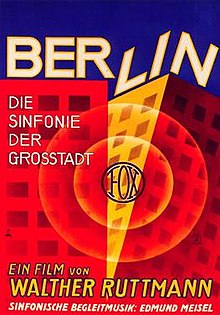
Silent Saturday: Berlin, Symphony of a Metropolis (or Berlin, Symphony of a Great City)


1927 documentary

Rating: 17/20

Plot: A day in the life of bustling Berlin.

The wild editing and music (the Olympia Chamber Orchestra was in this version that I heard) reminded me a little of Koyaanisqatsi a little. The chaotic arrival of a train hooked me, and then my eyes were glued to this thing. Typewriter dizziness followed by monkeys, fun animatronics in shop windows, the innards of factory machines, traffic, the hustle and bustle of pedestrian and vehicle traffic. I don't know what it reveals about Berlin, apparently a great city, unless the intent was to show off the "hat game" of Berliners during the nightlife scenes at the end. With that sort of hat game, no wonder Kennedy was proud to proclaim that he was a Berliner.

This whole thing is just so musical, so the "symphony" in the title is apt. Fiercely-edited juxtapositions, perfect camera angles, and some 1920's movie trickery give this a rhythm that, even watching this 90 years after it was made, is refreshing. There are a lot of more poignant moments, too, including a windy section in Act 4 where there's an apparently suicide, completely staged by director Walter Ruttmann, I suppose. It makes the whole thing a little difficult to trust, but it can be forgiven because the way the lady's eyes are shown in that scene is such a powerful image.

Oh, and Charlie Chaplin's feet make a cameo appearance.

The Unbearable Lightness of Being


1988 drama

Rating: 15/20

Plot: A surgeon has sex with a bunch of women in Czechoslovakia as Russians invade.

If I'm working on a best-of-1988 list, I can't pass up a movie that features Daniel Day-Lewis and Juliette Binoche, can I? There are so many accents going on in this, but both give great performances. And so does Lena Olin, who I don't think I know. There's a physicality to the performances. A great early scene has Day-Lewis chasing Binoche through an old-folks home, and it's filmed really well but also features these performers who know exactly what to do with their bodies. And that continues throughout--from the quiet scenes where characters are reflecting on something to the numerous sex scenes.

Most of those sex scenes are wild endeavors, like director Philip Kaufman and the actors wanted to go at them like they were action sequences. The first time Day-Lewis and Binoche get together, for example, made me wonder how at least one of them didn't get seriously injured. They're erotic, but Kaufman isn't really filming them with the purpose of being erotic.

However, I have to say that there's a recurring bowler hat here that had a "Pavlov's dog" type of effect on me. An early scene has Lena Olin writhing and crawling over a mirror on the floor, and she's wearing the bowler. Later, the bowler was used in some sort of foreplay again, and eventually, I started to get aroused every time I saw that bowler. Nice trick there, Kaufman. Nice trick.

This is often a sprawling and difficult-to-follow story that feels a little pompous, but I did like some comedic bits thrown in. There's some fun visual humor with a lady and a dog in a car, and there's another moment with a fellow passenger on a train that was almost funny. There are also a pair of pigs that play a single pig, and their performances were really good.

The best scene has Day-Lewis staring down a cactus because if there's a scene in which Daniel Day-Lewis stares down a cactus in a movie, it's probably going to be the best scene.

Who Wants to Kill Jessie?


1966 Czech sci-fi comedy

Rating: 14/20

Plot: A married pair of scientist find themselves in some trouble when the wife's dream experiments unleash her husband's dream characters into the world.

Czech sci-fi comedy is where it's at! This was recommended by Eric. Last year, I made it a goal to watch more movies from Czechoslovakia because they usually hit my sweet spot. They're usually so imaginative and fun. I think I watched somewhere around five. So that wasn't good. I don't remember seeing any that showed us both a glimpse of a cow's dream and a child urinating on a superhero dream character as he tried to climb out of a sewer.

There's a lot of creativity here as three dream characters--the fetching Jessie who I just couldn't stop leering at like I was also some sort of comic book villain, a cowboy villain, and some sort of caped strong man villain--pop into the real world. There's chaotic destruction, but they also take time to play a piano or, in my favorite recurring reference, drink a baby's milk. This reminded me of the Batman television show that came out at around the same time. It didn't have the onomatopoeic effects, but the dream characters did communicate via talking bubbles that were hilariously swiped or shot away and in one instance even turned so that other characters could see what was being said. I liked how the husband character always had to look up to see what Jessie was saying since it couldn't be heard.

There are all sorts of fun throwaway moments that keep things wacky, but I wonder if there's a subversive message to the whole thing, something about a "freedom from dreams" or the obligation we have regarding our dreams. I'd like to know what a feminist would have to say about where the husband and wife end up by the end of this.

I don't know this director--Vaclav Vorlicek--at all, but he's apparently still working at the age of 80-something. Maybe I'll Czech out more of his work soon. 

The Thin Blue Line


1988 documentary

Rating: 16/20

Plot: A look at the murder of a police officer in Texas and whether or not the man in jail is actually the one who committed the crime.

Burger King product placement made me laugh as I was supposed to be focusing on how the "wheels of justice" are capable of doing a lot of harm. There's a lot that is haunting about this Errol Morris look at the story of Randall Dale Adams, a drifter who was accused and convicted of a murder he didn't commit. Knowing that the whole thing has a semi-happy ending with this documentary playing a part in the discovery that Adams was indeed innocent makes it a little easier to watch, but here's a guy who lost 11+ years of his life, prime years when he could have gotten all kinds of women with that bushy hair and mustache combination that he had going on. Most chilling might be a tape recording played right before the closing credits. The crime is also shown from various angles in these artsy reenactments. I didn't know how to feel about them at first, but that slow-motion flight of a Burger King cup with a chocolate milkshake convinced me that I was watching something great. Also chilling were these words--"It takes a great prosecutor to convict an innocent man."

I'll tell you what really threw me off here. In the interview segments with Adams, I couldn't help hearing Nicolas Cage. He has a very similar cadence or rhythm to his voice as Cage.

Loved the score, a very typical Philip Glass thing that fit perfectly.

I wonder what Werner Herzog had to eat after Errol Morris completed this documentary. My guess--a Burger King chocolate milkshake.

The Asphalt Jungle


1950 heist movie

Rating: 16/20

Plot: A recently-released criminal gets a team together to pull off a heist.

Marilyn Monroe's first performance although I don't think she ever looks quite like she does on the poster. I think I'd like to see Monroe's appearances in chronological order to check out the development of her mole.

This has just enough style and some good performances (I especially liked Sterling Hayden), but the double crosses seem a little Hollywoody. A good heist movie is only as good as its big heist scene, and this pulls its off with style and suspense. It's reminiscent but not as good as the one in Rififi.

My favorite part is close to the end. This is probably a spoiler, so you might not want to read it if you haven't seen the movie, but I believe it's suggested that some horses are going to devour one of the characters.

Hiroshima Mon Amour


1959 first movie

Rating: 18/20

Plot: A French actress has a brief affair with a guy in Hiroshima.

So this was Alain Resnais's first feature film? It's so confident that that's difficult to believe. And so enigmatic. That opening, with the entwined bodies glistening and eventually covered in ashes, is almost coming out and announcing, "Hey, everybody, hold on! This is going to be a masterpiece!" Then, there's haunting and horrifying Hiroshima imagery--a museum tour, a bouquet of bottlecaps, wounded people--and you're almost convinced that this is going to be a documentary with some intercut artsy-fartsy sex scenes.

It is not a documentary about Hiroshima although that public tragedy plays a big role in the understanding of a character's very personal tragedy. No, this is a movie about the "horror of forgetting," a look at memory and the inability to forget, fears of futures, fears of indifference, other unknown fears, dreaming, being unaware of dreams. A character claims, "You think you know, but no. Never." The script is poetic to the point where it's unreal, the kind of dialogue that could only be found in an intellectual's wet dream. But it adds to the lovely mystery. It's a movie you understand with your bowels or those parts of your mind that can't shake the past's regrets or memories of misfortunes. Or maybe you don't understand this one at all? This is another one of those movies that you just let envelop you, one you feel.

The cinematography, by Michio Takahashi (who I've not heard of) and Sacha Vierny (who I have), perfectly adds to that mystery. So does the score, a really good one for the 1950s.

And oh! I almost forgot to mention Emmanuelle Riva, the French actress who plays the French actress. This is her first film, too, and she's just about perfect, a real case of "1,000 women in one" as the guy character says.

Some favorite moments: that opening, of course; the shimmering light in a scene that takes place in a tea room, a possible nod to Casablanca; mirror inner monologue; and a remarkable old lady at a train stations who sits in between the couple as they have a conversation.


Journey to Italy


1954 drama

Rating: 16/20

Plot: A married couple visit Italy.

There's no time to read about the ending of Roberto Rossellini's anti-romantic drama and sightseeing tour of Naples, Italy, and I'm not sure what to think of it. I didn't like it, but it didn't sour me on the rest of the film, one of those that ties its setting to its drama so perfectly. The symbolism of the places Bergman's character visits is a bit on the nose, but they're cool to see and well filmed. The part in Pompeii is especially poignant though I would rather watch the Coogan/Brydon Trip to Italy again before watching this. It's got more impressions and sing-a-longs, and it doesn't force you to watch the disintegration of a marriage, something that's a little depressing.

You could argue that the disintegrating marriage is the main character in Voyage to Italy, but I do like how both of the characters are created. Their conflicts have begun a long time before we see them riding in a car at the beginning of this, that disintegration en media res, and it's entirely unclear what happens after the credits roll. Their differences are clearly defined by Bergman and Sanders desiring different things at this stage in their relationship. Bergman's character's fueled by some inner anguish, and there's a lot of subtlety to her performance. Sanders appears to be an actor tortured by this entire experience, and that adds some depth to his character here.

By the way, George Sanders' character mentions being bored a handful of times in this, and it's a little hard to watch that a few decades after he wrote a suicide note about being bored before taking his life.

Alex van Warmerdam Fest: The Northerners


1992 black comedy

Rating: 16/20

Plot: Residents of a one-street suburb next to an artificial forest try to figure out what they want in a mailman.

Possibly, this is Alex van Warmerdam critiquing repressive nature of Dutch suburbanites. The town does have its own school, butcher shop, and forest, and they do have access to a church in a nearby community, but they're really closed off from the rest of society. The characters feel like pieces in a playful allegory. The blind hunter guy, the postman, the other postman, the kid on the motorcycle, the horny butcher. Add in a vulture, a religious icon coming to life, forest butt temptation, surprise sainthood, and an inept traveling museum, and you've got a lot of pieces that don't really come together but feel like they have to be about something.

Regardless if the non sequiturs and absurdist humor really add up to anything at all, this might be the van Warmerdam movie that I've enjoyed the most so far. I think I've decided that I have a sense of humor that fits right in with the collective sense of humor of Scandinavia. Kaurismaki, Andersson, Bergman. van Warmerdam. These guys are hilarious!

If you need any evidence that van Warmerdam is a comedic genius, look no further than the scene in this where a guy pops in to sell ice cream.

Bad Movie Club: Zolar


2004 television sci-fi action movie

Bad Movie Rating: 2/5 (J.D.: 1/5; Josh: 1/5; Lisa: 1/5)

Rating: 4/20

Plot: Aliens are trying to do something, and kids into extreme sports team up with the titular blue alien, also into extreme sports, to stop them.

Does a hybrid of extreme sports and science fiction sound like the kind of thing for you? Do you like movies from the 1990's that seem like they can't let go of the 80's but were actually made in 2004? Do you long for the type of action provided by old-school Power Rangers episodes but can't find even though there are a seemingly endless amount of incarnations of that product? Well, Zolar might be the movie for you!

Obviously, the actors were hired for kind of being able to skateboard or whatever more than having any ability to act. They're mostly bad in the typical ways teenagers are bad. Jordan Hoffart, the kid covered in the blue paint and (I hope) is given prosthetic ears and a fake nose, is a special case. Sounding inauthentic as either a kid or an alien, Hoffart gives a performance that somehow manages to offend. Look at this fucker:


C. Thomas Howell, an actor who probably should know better, is even worse. He's not in the movie as much, playing a character who, even though he's supposedly the main villain, does next to nothing. It's a hilariously bad performance, aided by his ridiculous costume. I mean, look at this fucker:


None of them are helped by the script, penned by some guy named John Derevlany, a guy who's been nominated for a Primetime Emmy. Instead of winning something like that, he should probably be bludgeoned with one.

Most inexplicable moment: It has to be how it takes about a half an hour of movie time with Zolar before the kids realize he's not human. They think he's one of those blue-tinted people from Kentucky.

In the Mood for Love


2000 romance

Rating: 18/20

Plot: Neighbors connect after discovering their spouses are cheating on them with the other's spouse.

Kar-Wai Wong could say that he finds the story of the tragedy of missed connections or failed romance as beautiful as a love story with a happy ending, but I wouldn't understand him because we don't speak the same language. This movie has language, but it's the visual language that really communicates here. Wong's a wizard in the ways he conjures these colors, colors that just made me swoon. I could spend two hours just looking at the dresses in this movie, especially if Maggie Cheung's wearing them because quite frankly, I enjoy her shape. I'm not able to articulate exactly what any of these color combinations mean because they're not communicating on a logical level. They mean something in some recesses of the soul.

This is one of the best-looking movies I've ever seen. The colors are part of it, but the framing of these shots, the recurring visual motifs, this crisp cinematography, these two gorgeous human beings, and the movie's rhythm all contribute to its aesthetic appeal. I loved all these random shots--of excessive smoking rising into a light (smoking has rarely looked this good in a film), the panning shots of food during a reenactment that looked more like how a tennis movie should be filmed, lots of clocks, those walks for noodles at the noodle stand, Mahjong tiles, lots and lots of hallways, shadows of a blowing curtain.

The leads are filmed with the same eye as the colors. Cheung and Tony Chiu-Wai Lang really are gorgeous, but they also know how to move. Both make all sorts of barely-perceptible movements that have enormous amounts of meaning. Sadness, longing, jealousy, more longing, horniness, indecision, understanding, not understanding, more longing, desire, and every other possible emotion that two people in this couple's particular situation could have are articulated without any verbal communication. They verbally communicate, but you could watch them work their bodies and get the same messages. Wong also frames them so well, using the architecture and set design to help us understand these characters and their situations. Walls trap them, ceilings seemingly cave in on them, bars and other obstacles obstruct. Sometimes, they're just shadows.

"The past is something he could see but not touch. And everything he see is blurred and indistinct." Oh, shit!